
Islamiyat Ojelade
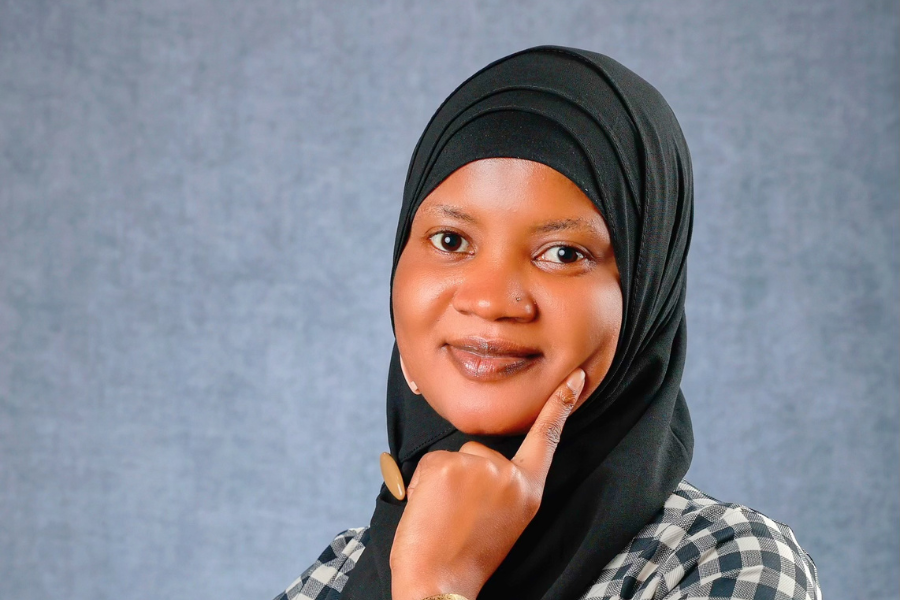
”Learn deeply, think critically, create impact”
College: Arts and Sciences
Degree Program: Materials Chemistry
Degree: Doctoral
Motivation to pursue a graduate degree
I have always been driven by curiosity and a desire to understand how chemistry can be used to address real-world challenges, particularly those related to global energy needs. Pursuing a graduate degree allows me to deepen this understanding while contributing to meaningful solutions to the world’s energy crisis. I chose FSU because it provides access to world-class facilities such as the National High Magnetic Field Laboratory, the largest and highest-powered magnet lab in the world, along with a collaborative and innovative research environment. These resources have equipped me with the skills and knowledge needed to advance cutting-edge energy materials research and contribute to sustainable energy solutions.
Importance and/or impact of research and work
Batteries play an integral role in our daily lives, powering everything from small electronics like phones and laptops to electric vehicles and large-scale energy grids. However, today’s batteries rely on flammable liquid electrolytes, which pose safety risks and limit performance. As global energy demand rises, there is an urgent need for safer, more efficient, and higher-capacity energy storage solutions. My research focuses on replacing these flammable electrolytes with solid electrolytes, which offer improved safety, lower cost, and higher energy density. I design lithium- and sodium-based solid electrolytes using time- and energy-efficient methods, investigate their structure-property relationships with advanced characterization techniques, including electrochemical impedance spectroscopy (EIS), X-ray diffraction (XRD), solid-state nuclear magnetic resonance (SSNMR), and Raman spectroscopy, and evaluate their electrochemical performance in all-solid-state batteries (ASSBs). Ultimately, my work contributes to the development of next-generation energy storage technologies capable of meeting the world’s growing energy needs.
Career aspirations
My career goal is to become a materials scientist in an innovation-driven environment where I can apply my expertise to develop advanced energy storage technologies. I aim to contribute to safer, more efficient, and sustainable solutions that address the world’s growing energy needs, while also mentoring and inspiring the next generation of scientists.
Advice for anyone considering graduate school
My advice for someone considering graduate school is to pursue a field that genuinely excites and motivates them, because curiosity and passion are essential for the challenges ahead. Seek out mentors and peers who can guide, support, and challenge you, and don’t be afraid to ask questions. Finally, remember that graduate school is not just about research - it’s also about developing skills, resilience, and a network that will support your future career.
Accomplishments during graduate career
I am proud of several accomplishments during my graduate studies, including publishing my first-authored paper (with another soon to be published), co-authoring more than five additional publications, and presenting my work at national conferences such as the American Chemical Society (ACS) and the National Organization for Black Chemists and Chemical Engineers (NOBCChE). Beyond research, I have served in leadership roles, including as College Representative in the Congress of Graduate Students (COGS), and have mentored undergraduate students through the Florida George Louise Alliance for Minority Participation (FGSLAMP), supporting the next generation of scientists. One experience that has been especially meaningful is mentoring undergraduates, as it allows me to guide students through research and graduate school preparation, helping them gain confidence and pursue opportunities they might not have otherwise considered. These experiences have not only strengthened my skills as a researcher but also reinforced my commitment to fostering inclusive and collaborative scientific communities.